Hiring programmers is often challenging for businesses of all sizes, from startups to SMEs to enterprises. And it can be hard for different reasons, including the scarcity of the required developers and the inability to analyze their skills, evaluate their code, or measure their cultural fit with your company.
At the same time, finding programmers has changed in 2026. AI coding tools have rewritten what a productive engineer looks like, while the US Bureau of Labor Statistics still projects 15% growth in software developer jobs between 2024 and 2034. So, how can your startup find programmers for the project, especially if you have no technical background?
Below, you will find a detailed guide on how to find a developer for your startup, where you can do that, and what critical things you have to consider before looking for programmers. Enjoy!

AI coding assistants have changed what a productive programmer's day looks like. Tools like Cursor, Copilot, or Claude Code now write a large share of the routine code that a junior engineer used to write by hand. The work that earns the senior salary has shifted upward to harder problems. Now, senior programmers decide how the product should be built, weave AI features into the product itself, and review the work of other engineers who are also using AI.
For startups, this shift creates several practical changes when you go to find programmers for your project.
A senior programmer who knows how to work with AI tools well can now produce what used to take two or three mid-level engineers a year ago. Junior roles have thinned out, because AI handles much of the work that juniors used to do. As a result, hiring fewer but stronger programmers has become the common pattern in startup product teams.
Beyond classic web and mobile developers, startups are also hiring AI engineers, ML engineers, prompt engineers, and AI agent builders. Each of those is a real specialist role with its own skills and pay range. If your product uses AI in any meaningful way, you will need to hire outside the classic full-stack developer profile.
Classic job boards and freelance marketplaces still work for general roles. But for AI-specialist hires, the strongest candidates often surface through AI-specific communities and open-source work, where their actual output is visible. Founders increasingly source senior AI talent from Hugging Face profiles, GitHub repositories, AI-focused Discord servers, and warm referrals from inside the AI tooling community.
The signals you weigh have broadened as well: alongside the CV and LinkedIn review, founders now look at AI agent demos, open-source contributions, and side projects.
A 2024-style tech interview typically banned AI tools in order to see the candidate's "raw coding ability." A 2026-style interview, by contrast, hands the candidate the same tools they will use on the job and watches how they work with AI: how they ask the AI for help, how quickly they notice when the AI is wrong, how they fix what the AI got wrong, and how clean the final code looks once they are done.
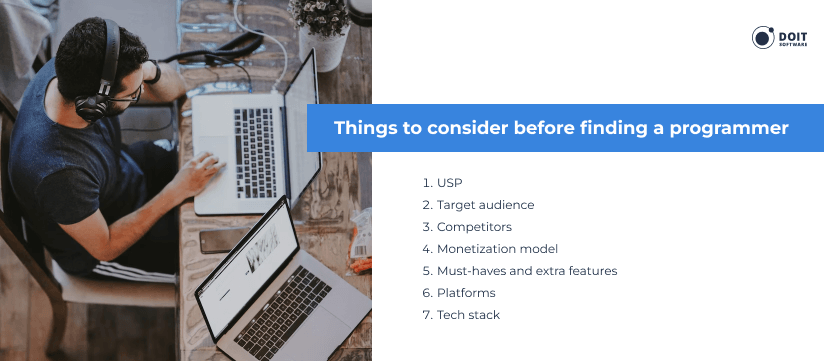
You must take some time to get the answers to several critical questions before you decide to find a developer for a startup. Clarifying such things will allow your organization to realize which programmers you must have on your team. Besides, that helps you correctly explain your expectations to all potential candidates regarding their expertise, experience, soft skills, etc.
Below, you will see a list of questions you can use to define your project objectives and hire programmers depending on their responses:
Ultimately, before you find programmers for your project, you have to determine whether you will build a minimum viable product (MVP) or a full-fledged solution. For instance, your organization may hire a small team of seasoned Flutter or React Native engineers from MVP software development companies to create an MVP, which takes 2-3 months. Meanwhile, the second case requires more diverse tech specialists who will work on your product longer.
In 2026, the MVP question often has a third option. Many non-technical founders can now build the first version of a product themselves using AI tools, a practice often called “vibe coding.” That lowers the bar for getting an MVP in front of users. But it raises the bar when you eventually bring in a hired programmer, because they have to take the AI-assembled prototype and turn it into something maintainable that runs reliably for paying customers.
Do you need to find a programmer with significant knowledge of this framework?
When considering hiring a programmer for a startup, you should pay attention to the following options:
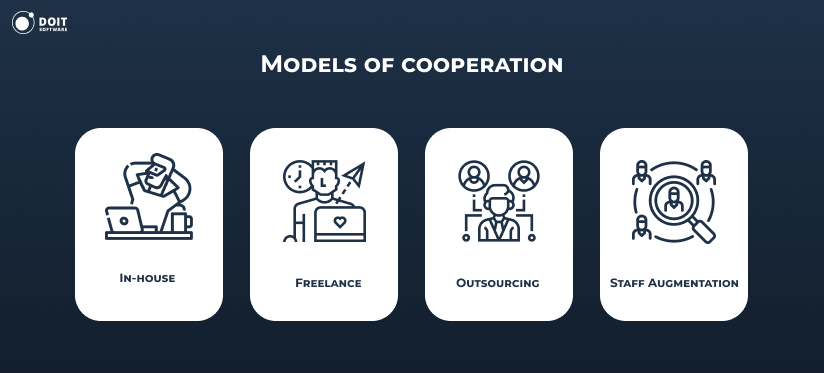
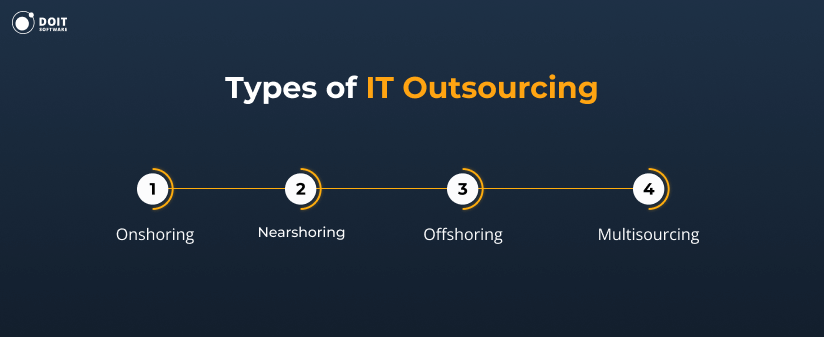
So, let’s analyze these four engagement models in detail.
Outsourcing is among the most common options when planning on how to find developers for your project. It requires you to delegate the development process to a software agency. For instance, many US companies prefer Latin America or Eastern Europe as outsourcing destinations. Meanwhile, Deloitte reports that the key reason for outsourcing (70%) is the desire to reduce costs.
If you need the best programmers to do simple tasks such as creating landing pages, fixing bugs, or integrating payment gateways, you should hire a freelance programmer. But if you want to find programmers for a startup and develop your solution from scratch, you will face great issues with freelancers because of insufficient communication and management.
Hiring an in-house software development team means that you will find programmers in the local market who will work from your company’s office. The particular model is perfect when you have years of future work and want to get complete control over everything. However, it is often time-consuming and costly to find programmers to hire for your in-house team.
Companies prefer staff augmentation to find a programmer who will strengthen their expertise level. Due to the flexibility that this model can bring to your project, you obtain much faster app development and launch. It makes staff augmentation beneficial for startups, SMEs, and large enterprises.
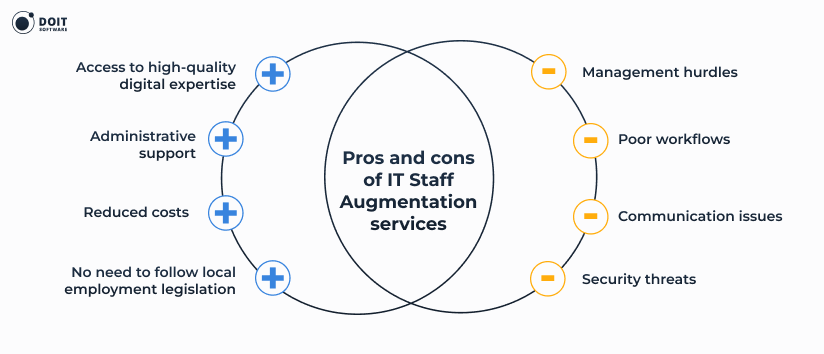
Different engagement models help you find programmers at different speeds and cost points. For a 2-3 month MVP build, freelance programmers or staff augmentation usually win. You get specialist time without a long-term salary line, and you can wind the engagement down once the build ships. For an 18-month product roadmap with continuous releases, in-house or a dedicated outsourcing team is the durable answer because the team carries product context across releases.
Staff augmentation sits between those two: capacity that arrives in days and scales down without locking you into headcount, which is why founders use it for everything from filling a senior specialist gap to extending an in-house team for a defined project.

The cost of hiring a programmer can vary significantly depending on the developer’s seniority level, their location, the engagement model you choose, and how niche the stack is. Hourly rates in 2026 range from about $20 per hour for juniors in low-cost regions to over $180 per hour for senior US contractors, with most experienced startup hires landing somewhere in the $40 to $90 per hour band. Where you source from drives most of the spread.
United States
$80-$180/hr
BLS 2024 OEWS median software developer pay is ≈ $133,000/year, which works out to ≈ $64/hr full-time equivalent; senior contractors price above that.
Western Europe
$60-$120/hr
Includes Germany, the Netherlands, Sweden, and Switzerland. Skews higher in fintech and regulated industries.
Eastern Europe
$34-$70/hr
Ukraine, Romania, Poland, Bulgaria, and Czechia all fall in this band. Specialized stacks like Python and ML push to the top end.
Latin America
$30-$65/hr
Argentina, Brazil, Mexico, and Colombia are the active sourcing markets. Time-zone overlap with US clients is a hiring driver alongside cost.
Sourcing from Eastern Europe or Latin America keeps senior rates well below US contractor pricing while delivering similar quality and English proficiency. The other half of the cost equation is the engagement model you choose. Outsourcing and staff augmentation providers typically bundle payroll, HR, admin, and contract overhead into the hourly rate, while a freelancer’s rate covers their work only.
AI tools have started to affect rates as well. Strong senior programmers who work well with AI tools now charge a premium of roughly 10-20% over the going senior rate, because they can produce what used to take a small team. The total budget often comes out roughly the same as a 2024 plan, but with fewer hires at higher rates per hire.
Where to find programmers for a project? This question bothers many founders opting for software development. And although developer conferences, tech forums, cooperation with recruitment agencies, and even internship programs are still effective ways to find a coder, we have decided to focus on popular web resources.
So, let’s consider the top eight places on the Internet where you can hire programmers:
Niche job boards
Niche tech communities
B2B ratings and reviews websites
Referrals
Slack communities
Tech forums
Now, after you have learned about engagement models, critical things to consider, and where to find programmers, it is time to get some valuable tips regarding the hiring process.
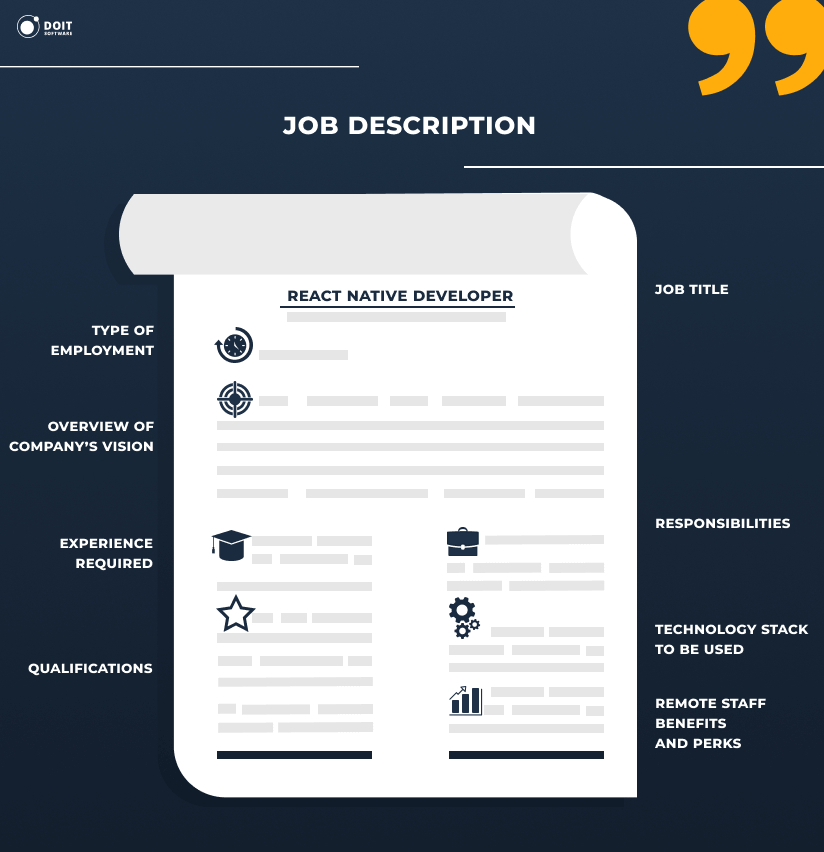
Before reaching out to potential candidates, you should create an appropriate presentation of opening positions. This will allow for attracting the necessary people. So, what does the efficient hiring process look like?
Depending on your project needs and their complexity, you should find programmers with a particular experience and expertise level. For example, you may require a senior full-stack developer to assist in delivering a web platform. But apart from evaluating developers’ tech knowledge, you should also pay great attention to their soft skills.
These relevant skills represent personal traits defining how an individual manages his heavy workload and meets deadlines. Also, they help determine what approaches he uses to complete tasks effectively. Which makes them crucial for your potential employee to become an integral part of your team.
Below, there is a small list of questions that will help you find a programmer suitable for your project and team:
If you want to find programmers on freelance websites, you should also evaluate candidates’ cooperation skills and response time.
Since hard skills refer to tech and subject-specific expertise, you have to understand that they may vary depending on the type of coders you want to hire. So how to find a programmer with the right hard skills?
Firstly, you must define what technical tasks your potential employee will perform. This allows for determining the level of required professional competence and specialization. As tech candidates can outsmart recruiters, most organizations use chief technology officers (CTOs) to evaluate developers’ hard skills properly.
However, if you have little or no technical background but you are responsible for interviews, you can consider the following tips to find programmers:
Some founders skip the in-house technical screen entirely. DOIT and similar augmentation partners run pre-interview video recordings and customizable screening rounds, so a non-technical founder can evaluate a screened candidate without owning the technical review.
Conducting a tech interview is among the most effective ways to evaluate a programmer for your project, especially when paired with a structured platform. Online coding-test platforms like HackerRank, Codility, CoderPad, and CodeSignal let you run live coding sessions or take-home tests without setting up infrastructure.
Interview-as-a-service tools like Karat hand the technical screen to a specialist when your team can’t run it in-house. Ultimately, conducting live coding test tasks is the most effective way to define a candidate’s tech expertise.
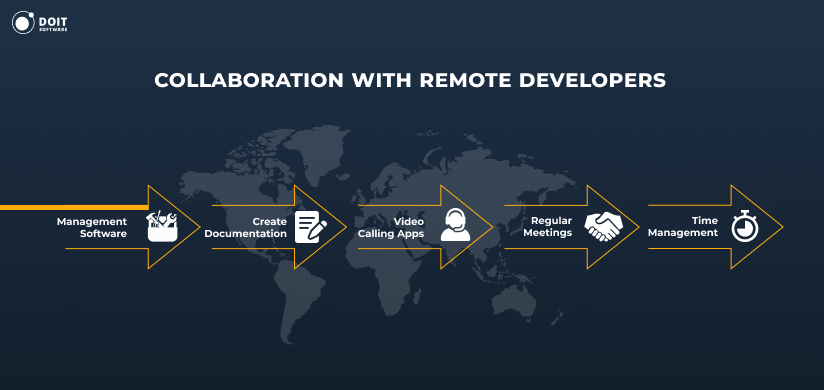
Now you know how to find a developer to build a top-notch product. So, what should you do next? The answer is to ensure the proper onboarding process. But when it comes to remote developers, it can be a bit challenging compared to in-house employees. Below, we have defined five critical steps to make onboarding more efficient and prevent potential issues:
Hiring a programmer for a startup or SME requires some effort. Now you know some helpful resources to find talented coders for hire and are aware of the staff augmentation benefits. However, the most significant challenge is to rent a programmer who will meet your project needs as related to experience, availability, and skill sets.
Fortunately, with staff augmentation services, you can extend your team with extra expertise and launch your product faster. That is because the DOIT Software team can provide you with the top 1.5% of tech specialists. Hiring programmers with DOIT Software is much simpler since we ensure tech personnel fit by evaluating their:
Need a programmer for your project to boost your product growth significantly? Contact us and get the first CVs of experienced software developers in a few days.
If you need a programmer, you must analyze the available engagement options (outsourcing, freelance, in-house, and staff augmentation). Then you should check specific resources such as niche job boards, tech communities, freelance platforms, or social media used to find software engineers and their portfolios. And finally, you need to interview the relevant candidates.
The cost of programmers for hire can vary depending on their tech expertise, experience, and their location. Thus, the wages may range from $20 per hour to over $100 an hour. For instance, the average middle/senior developers’ rates in Eastern Europe, particularly Ukraine, are $40-65.
The platform where you can hire a programmer depends on the type of developer you need. Thus, you can find freelance coders on Upwork or Toptal. Meanwhile, Indeed or Glassdoor are perfect for in-house staff, and Clutch or GoodFirms will help you find a reliable outsourcing or staff augmentation partner.
Suppose you want to find developers for a startup. In that case, you have to first create a list of must-haves and unique product features, define the platforms to cover (e. g., mobile, desktop), and prepare the UI design of your future application in advance. Thus, you will understand what tech expertise and experience your candidates should have. And after selecting a suitable engagement model, you can find the most appropriate coders using job boards, tech forums, social media platforms, or B2B reviews websites.