This guide covers how to hire app developers from start to finish. It walks you through the different types of app developers, the main hiring models and what each one costs, where to find good candidates, the skills to look for, and the steps to take from your first conversation through to onboarding.
If your startup is struggling with finding an app developer, keep reading. It’s time to uncover valuable tips on how to hire an app developer the right way.
App developer is a broad term that covers everyone from the people building iPhone and Android apps to the developers behind the web apps you use in a browser. Which kind you need depends on the platforms you’re targeting and the budget you have to work with, and they generally fall into three groups. Let’s take a further look.
Native developers build for a single platform using its own language and tools. An iOS developer works in Swift with Apple’s SDK and builds for iPhone and iPad, while an Android developer works in Kotlin with the Android SDK. Native apps tend to give you the best performance and the fullest access to device features like the camera, GPS, sensors, and push notifications, which is why performance-heavy products usually go the native route.
The thing to keep in mind is that these two skill sets don’t really overlap. An iOS developer won’t be building your Android version, so if you want your app on both platforms, you’ll generally end up hiring an iOS developer and an Android developer separately. Each one comes with its own frameworks and app-store review rules to handle.
Cross-platform developers take a different approach, building a single codebase that runs on both iOS and Android. The two main frameworks here are Flutter, which is Google’s and built on Dart, and React Native, which is Meta’s and built on JavaScript. For most apps, this works out faster and cheaper, since one developer can cover both platforms at once.
The two frameworks suit different teams, though. React Native tends to be the easier fit if your team already works in JavaScript or React, and there’s a large pool of React Native developers to hire from. Flutter, for its part, gives you more consistent visuals and performance, which helps a lot with animation-heavy or design-led apps.
It’s worth getting the Flutter vs React Native decision right early on, because switching frameworks later on usually means rebuilding from scratch.
Most apps also need a backend, the server-side part that handles your data and user accounts, as well as anything that happens outside the phone itself. That work usually goes to backend or full-stack developers who work in languages such as Node.js, Python, Java, or Go. And if your app is web-based or has a web companion alongside the mobile version, you may want a frontend web developer in the mix as well.
The good news is that you don’t always need every one of these roles at the start. A simple first version might run perfectly well with a single full-stack developer (with the help of a UI/UX designer or tools like Cursor and Claude Code), while a larger product tends to require a small development team, with the work split across a few people.
Once you know the kind of app developer you need, the next question is how to bring them on. There are four common models, and they mainly differ in two things: how much of the work you manage yourself, and what you pay to get it done. Let’s take a look.
Freelancers
You
Lowest hourly, varies a lot (from $15 to $150 per hour based on region and seniority)
Small tasks
In-house team
You
Highest (salaries of $88K - $160K/yr plus overhead)
Long-term products you'll keep building
App development agency
The agency
Project fees of $35-$200/hour
A full build the agency runs for you
Staff augmentation
You
Mid-range hourly, no recruitment fee
Adding vetted developers to your own team
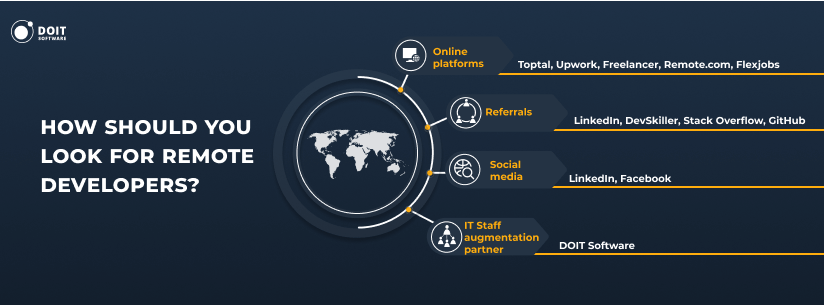
Locating the best app developers to join your team is easy if you know where to look. There are a number of places that yield desirable results.
Leveraging your network in the IT community can help you connect with high-caliber candidates. You can look for referrals through online communities on LinkedIn, Y Combinator forums, Stack Overflow, or GitHub. Alternatively, your company can establish its own employee referral program.
This approach gives you access to app developers with a proven work history. This improves your ability to find programmers who have a verifiable work history.
Today social media offers numerous opportunities to interact with qualified app developers. Sites like Facebook and Reddit even support communities and groups of like-minded people. On LinkedIn and Facebook, you can post vacancies in your company, and as users interact with your brand, they can also check for available posts. You can also have existing employees engage with your audience to give potential candidates an idea of what to expect in your organization.
Online recruitment platforms also offer a great opportunity to connect with qualified app professionals. The majority of job sites also offer functionality that matches your job opening to potential candidates. They match the personal details provided by professionals with your job description. If a developer is looking for a remote work position that matches your criteria, they will be alerted to your available post.
Here’s a brief list of popular platforms you can use:
LinkedIn brings professionals and companies together. Developers create profiles and upload their qualifications, work history, and skills which can be verified by people who know them. Companies also have profiles where they can keep the community updated about their operations. Your company can post a job post and directly engage with potential candidates on the site.

Partnering with an IT staff augmentation company is one of the easiest ways to hire engineers. The bulk of the recruitment tasks falls onto the partner, simply leaving the client to confirm which candidates they want to hire. The IT staffing service provider often performs administrative tasks, vetting candidates and verifying qualifications.
IT staff augmentation partners cut down the time required to hire app developers. Clients also cover limited recruitment costs, as they pay only for the individuals they hire.
Remote staffing companies also tend to already have a large database of qualified professionals. Their experienced hiring specialists can also connect with suitable candidates in different areas.
You will need to research IT staff augmentation companies that can cater to your needs. The best place to start is through recommendations from other companies that use similar services. B2B research platforms can provide you with lists of recommended service providers. They carry out the due diligence and verification processes. You can choose from the companies they review. Some platforms also help you hire a remote recruiting agency through their platform.
Here are some websites you can visit to find a reliable hiring partner to help you hire app developers:
The core mobile app developer skills start with the platform basics. For native work, that means Swift and the iOS SDK for iPhone, or Kotlin and the Android SDK for Android. The cross-platform work calls for either Flutter (built in Dart) or React Native (built in JavaScript).
Beyond the language itself, the things that really set a strong developer apart are clean, maintainable code, a genuine comfort working with APIs and databases, a habit of automated testing, and real attention to security and performance.
You don’t have to access all of this yourself. If you’re not technical, a short test task or a technical interview run by someone who is will tell you most of what you need. When we screen app developers at DOIT, every candidate comes with a pre-interview video, so you can see how they explain their work before you spend time on an interview yourself.
When considering how to hire app developers, there is more to consider besides their experience and expertise. While technical skills indicate how well-versed in the field a programmer is, soft skills are also essential. They help you to determine how well a developer will fit in with the rest of your team and their work ethic.
Here are a few characteristics you should consider when hiring an app developer that’s right for your business:
Collaboration requires good communication between geographically dispersed team members. In remote work, this is especially important. Excellent communication skills go beyond business-level comprehension of your company’s preferred language. It means that an app developer must be able to share critical information with team members, the project manager and other non-technical stakeholders.
For a project to progress smoothly, it is important that you hire an app development team with good organizational skills. They must be able to plan and carry out their tasks efficiently within the project’s deadlines. It is difficult to collaborate when there is no clear plan on how duties are being handled.
One of the reasons why companies choose to hire a remote app developer is that businesses need flexible people for the job. Ensure your candidate can easily adapt to your project’s changing needs. This is a very important aspect of hiring an app developer for remote work.
A creative approach to resolving issues is an admirable trait in a developer. Such an app developer can apply innovative solutions to quickly solve any problems that may arise. This could even result in an improved software product.
A self-motivated individual is able to undertake their duties while maintaining high productivity. In a remote working culture, this is important as there are fewer corporate-driven activities possible for motivating employees.
Work culture is another essential consideration when hiring an app developer. It is ideal for the remote developer to be a good cultural match with your organization. If they share the same values your organization upholds, it will be easier for them to integrate into the existing team and understand your business objectives.
There’s no mystery to how to hire app developers; it’s a clear, repeatable process. A handful of steps take you from a rough idea to a developer who’s started work. Let’s take a look.
Consider the duties you need the remote developer to handle. What kind of developer are you looking for? Use the summary of the job requirements to determine the level of experience and mobile app developer skills that will be necessary for the available position.
You should hire app developers with experience in similar projects as yours, as remote work arrangements make it harder to supervise every move employees make. The simplest approach on how to hire app developers starts with clarifying your company’s needs.
Then craft a detailed mobile app developer job description for your ad. Note the areas that matter most, such as the platforms the app has to run on and the tech stack involved.
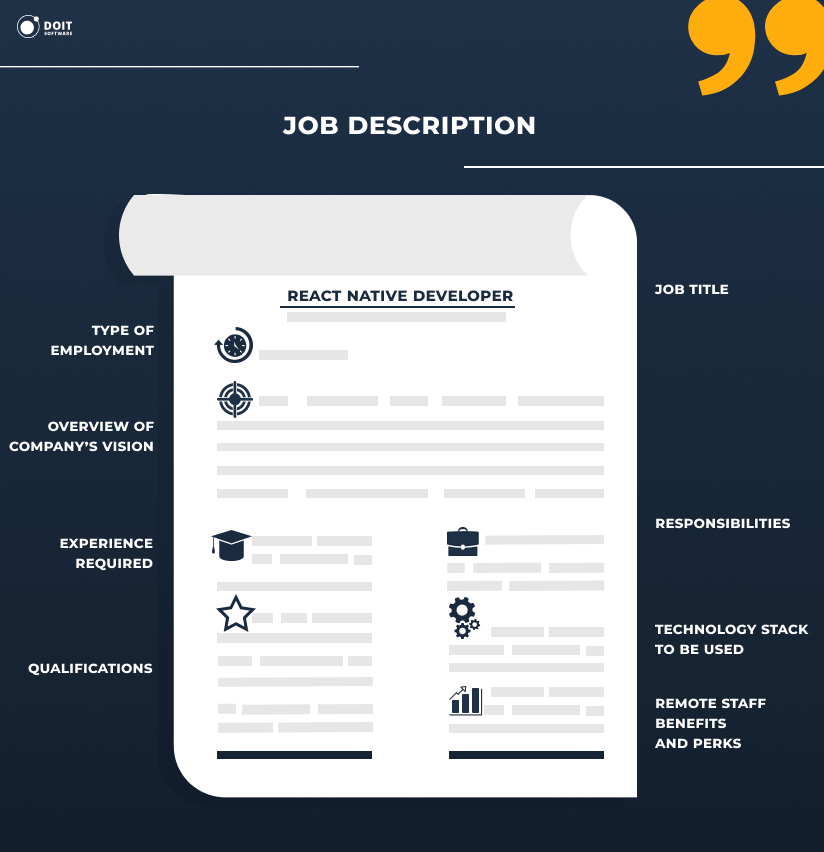
A good job ad simplifies the process of hiring a developer. It should include the following aspects:
Simplify your hiring process by enacting a structured interview process. That’s the best course to take to hire app developers without breaking a sweat. Make sure you assess all the important areas that determine how well a candidate can perform. Consider checking for self-motivation, an innovative approach to work, and flexibility. If hiring through an IT staffing partner, provide them with all your requirements.
Make sure you have enough adequate information on each potential hire. If you require a detailed curriculum vitae or a cover letter, be sure to communicate this to your candidates.
You will also need to request verifiable references to determine their work history. Get pertinent details or information on previous projects the candidate has worked on, so you can see the quality of their work. Obtaining verifiable work history helps you avoid candidates who misrepresent themselves or their skills.
The technical interview remains one of the most useful approaches to choosing the right developer, especially when leveraging virtual recruiting platforms. It allows the company’s representatives to screen candidates according to their comprehension of the technical requirements without having to put them in front of a whiteboard.
You can also utilize online programming test task tools like HackerRank and Qualified.io. These tools will help you determine how well a candidate works with the technology you will be using. If a candidate is familiar with the programming languages and the tools to be used, it will be easier for them to start working on the program right away.
When considering how to recruit app developers with the right skills, you may find that not everyone has the time or the inclination to contribute code to open source. In addition, commercial code is often closely guarded and cannot be shared with potential employers. These online tests allow you to test for skills efficiently and without having to call candidates in for an in-person interview.
The final interview is for clearing up any questions you have for the developer. It determines who you will hire. You can ask technical and analytical questions during the interview, depending on the type of app developer you are looking to hire.
You will have to find candidates who can adapt and respond well to motivation exercises, minimal supervision and maintain a high level of productivity. This final interview should clear your potential hires for all these qualities.
After selecting the most suitable developer for your team, it’s time to present the job offer. Set the terms of employment, the working hours, the start date, and who they’ll report to, so the new hire can prepare.
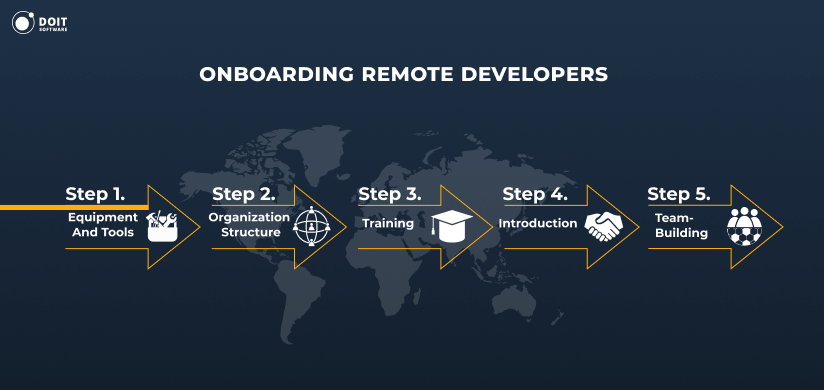
Once they accept, it’s time to move to the next step — getting them started with the job. Make available all the equipment and tools the app developer will need, and set up their access before their first day.
Put together a short plan for welcoming them: introduce them to your goals and to the people they’ll work with, share the project background and current progress, give them a walkthrough of the codebase, and point them to your documentation. A day-long session early on is a good way to walk them through it all as they get going.
Set aside time for the new hires to interact with their co-workers for team-building purposes. They can also engage with their tech leaders regularly to keep them in the loop.
You’re probably looking into how to hire app developers at less expense. You can find more affordable hires in popular outstaffing destinations such as Eastern Europe and Latin America. The USA and most of Western Europe carry some of the highest rates, so where you hire makes a real difference to the budget. Here’s a brief table showing the cost of hiring app developers in various regions:
USA
$90-$150
UK
$50-$80
Germany
$50-$75
Latin America
$35-$70
Eastern Europe
$35-$65
That gap is why Eastern Europe and Latin America are common places to hire: senior developers there run roughly 30 to 40% below US rates at comparable quality. Whichever region you pick, the hourly rate isn’t the whole budget. A real project also carries onboarding, project management, QA, and ongoing maintenance.
So what’s the secret on how to hire app developers more effectively? Well, managing offsite employees is not the same with having the developers in the same building. However, providing the right tools and ample resources makes it easier to keep everyone on the same page.
You can leverage a centralized project management system to make it easier to keep track of project development. You can check progress, assign tasks, and set deadlines with developers receiving notifications remotely. You can try out Trello or Jira.
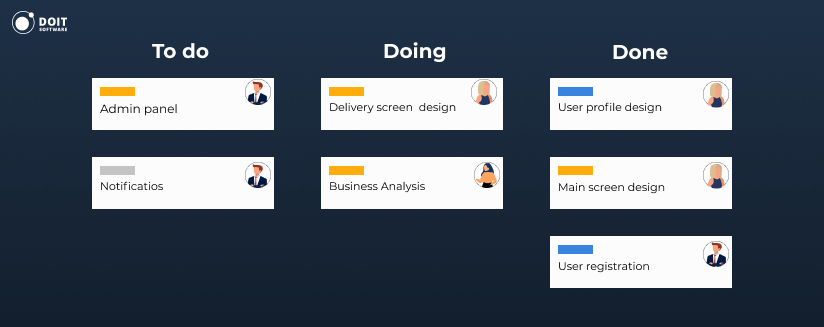
Avoid having programmers stop working whenever they need to clarify how a procedure should be done. As there may be no one readily available to address their queries, document tasks, and internal processes, and share with the whole team.
You can build better relationships within a remote app development team by allowing people to put a face to a name. Use video conferencing tools where possible to bring everyone together during meetings.
Keep everyone involved by holding regular meetings to discuss the progress made. You can also give each app developer a chance to highlight challenges they are facing. This will help you gather feedback and implement solutions quickly.
Working with developers in different time zones can be stressful. Discuss how best to structure work for each developer. Planning daily or weekly tasks in advance can help. With clear communication channels in place, it is possible for multiple app developers to work on one project in rotating shifts. Perhaps one team member can write code during their normal working hours while the other one sleeps. And the second one can review that code when it’s day time in their timezone.
Hiring app developers can be quite a smooth process when approached with the right strategy. Maximize your search area and put in place a rigorous interview process. All this, plus a well-rounded onboarding process will ensure that you have a winning team.
For more convenience, hire your remote app developers through DOIT Software. Given our extensive recruitment experience for app developers, finding you the top tech talent won’t take long.
Our hiring process involves just a few steps:
It depends on the route. With an IT staffing partner providing candidates, you can see the first vetted profiles in a few business days and have someone started in one to two weeks. A full in-house search usually takes longer; according to Glassdoor, the average time to hire in the US is around 23.8 days, which is similar to the global average.
Only if you go native. A native build needs an iOS developer for iPhone and an Android developer for Android, so that’s two skill sets. A cross-platform framework like Flutter or React Native lets one developer build for both from a single codebase. If you’re deciding between the two, it’s worth comparing Flutter vs React Native on performance and your existing stack.
Sign a non-disclosure agreement before you share details about your product, and put an intellectual-property clause in the contract that transfers ownership of all code and assets to you.
Yes, and plenty of founders do. Focus on what you can judge: the outcome you want, the budget, the timeline, and the developer’s record of shipped apps and client references. For the technical screening, lean on a trusted partner or bring in an engineer to run the test task. A good staffing partner handles that vetting for you, so you can hire app developers with confidence even if you’re not technical.