The modern customer-centric tech world forces companies to build custom solutions to meet the specific needs of their users. More and more businesses prefer developing custom software solutions as opposed to off-the-shelf ones to gain a competitive edge and win over customers.
Even despite the elevated software development costs of custom platforms, businesses acknowledge the benefits of having a tool tailored to their needs. What goes into the effective estimating of software development costs and smart project planning? In this article, we will investigate the average costs of software development and try to pinpoint the aspects that increase the price tag.
Software development costs by type fall into a few broad ranges, from $20,000 for a basic CMS to $600,000 or more for a full CRM or ERP build. The final cost depends on whether you start from a popular open-source base or build the system from scratch, on how much custom work the product needs, and on the rates of the vetted developers you bring to the work. Let’s take a look at what the most common types of custom software solutions are and how much it costs to develop software in 2026.
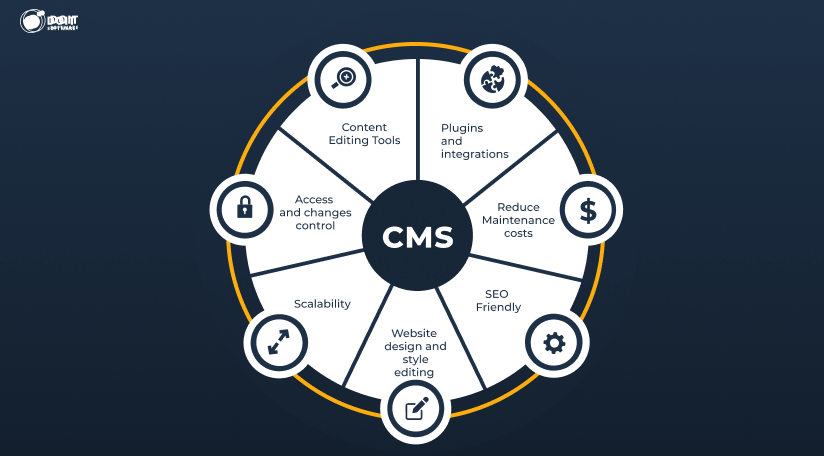
Some companies choose to build a custom CMS to meet the specific needs of their users. A CMS is a tool to create and update content like blogs, press releases, videos, and similar media. With the usage of additional plugins and libraries, your website can become a powerful way to promote your business. For example, with WordPress media folders, you can organize and manage files; Yoast SEO helps to optimize your website, and so on.
Although you can simply use an off-the-shelf solution like WordPress or Magento, going with a custom tool could be beneficial. Regardless of the customizability of modern CMS platforms, a custom-made software solution is much more expandable and even potentially profitable. Especially businesses with new and unique products or services would gain a lot from custom software development, as they can later offer it outside of the company and generate additional income.
CMS software development costs: from $20,000 to $50,000 for a basic platform with design, a few custom features, configuration, and similar setup work.

CRM systems incorporate various tools that help businesses keep track of their customers, win over potential clients, and manage vendor and partner relationships. There are hundreds of CRM systems on the market, from complex to basic and simple. However, companies with unique management approaches or target audiences might benefit from a custom CRM platform. Besides, CRM systems usually come with a scalable pricing structure that makes them quite an investment for a large company. Are you looking for the best CRM software? Creating a bespoke tool, in this case, might not only deliver you a software solution that perfectly suits your needs and requirements but also save you money.
CRM software development costs: around $100,000 on average for a platform with a basic set of features plus a few tailored functions. Large and complex CRM solutions like HubSpot, Salesforce, Freshsales, and similar enterprise tools can reach $600,000 or more.
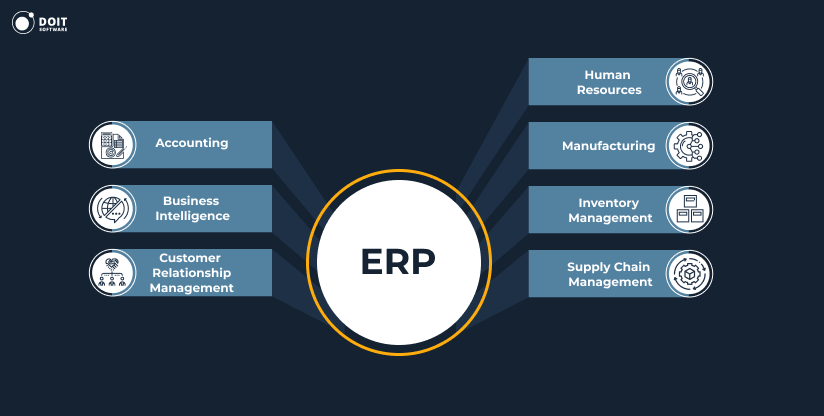
ERP systems help businesses manage their daily operations like accounting, compliance, supply chain tasks, project management, procurement, and similar workflows. A small company can afford to use an off-the-shelf solution, but as businesses grow, the number of daily tasks increases. The earlier you invest in a custom ERP and start using a system tailored particularly for your business needs, the quicker you will gain the benefits.
Having a custom ERP tool at hand is beneficial for any growing business, especially in less saturated industries. A scalable solution tailored to your needs and requirements will definitely cover your back and allow you to focus on the product itself. So, if you’re planning to build one from scratch, you may choose Java, Python or ASP.NET software development, for instance.
Even if you’re not ready to build a custom ERP from scratch, it’s worth comparing leading cloud ERP suites. Understanding the benefits of using IFS Cloud can help you see how a modern, cloud-based ERP platform streamlines operations, improves cross-department visibility, and reduces the need for manual work. These insights make it easier to evaluate whether an off-the-shelf solution can support your long-term growth without the cost and complexity of custom development.
ERP software development costs: start at $100,000 and grow with the number of features and the size of the company. The amount of data in large enterprises calls for more advanced features, which pushes the cost of an ERP build to $150,000 to $500,000.
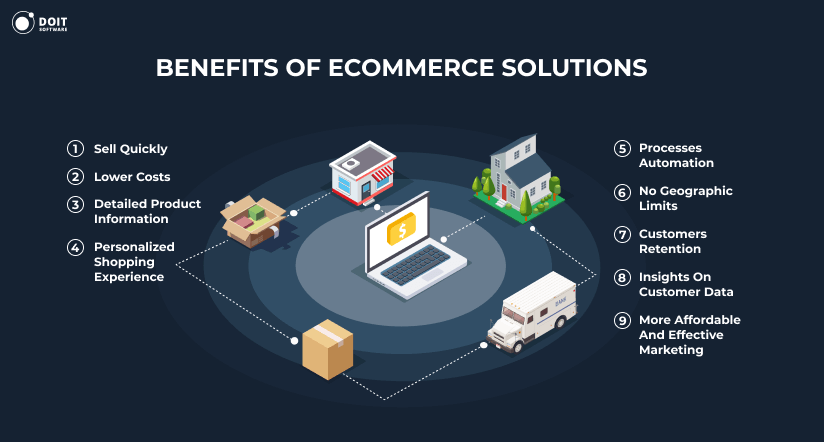
eCommerce software helps businesses create websites to promote and sell their digital and physical products. Such platforms provide a way to integrate the online store into the business’s website and give users direct access to products and services. Many businesses will find existing eCommerce platforms like Magento, OpenCart, Shopify, and WooCommerce satisfactory, but some companies require custom software solutions. ECompanies with unique architecture or complex requirements will benefit from the customizability and creative freedom of a custom eCommerce build.
eCommerce websites built on one of the popular eCommerce CMS, such as Magento, OpenCart, Shopify, and WooCommerce, have development costs: from $20,000 to $70,000 and more. It all depends on the level of customization, needed integrations, etc.
Software development costs for a custom eCommerce system built from scratch: starting from $50,000 for a simple product, and up to hundreds of thousands of dollars for complex solutions, depending on the requirements.
If you’ve decided to work with a ready-to-go solution, WooCommerce consulting companies can help you determine the most cost-effective and efficient way. Running a discovery phase will help you to achieve your custom eCommerce goals, ensuring that your investment aligns perfectly with your business needs.
Supply chain management is a complex business process that involves many actors: suppliers, vendors, retailers, distributors, producers, and end customers. The process starts with raw materials and follows them all the way until the end consumer purchases the final product. SCM software optimizes and automates supply chain management processes, improves performance, and grows revenue.
SCM software development costs: can start from $100,000 to $300,000 on average, and more for more complex solutions.
SaaS (Solution as a Service) applications are gaining noticeably more attention in the past few years. SaaS-based apps can be used in exchange for a monthly or yearly fee and can be accessed from any device. Usually, these types of apps are hosted in the cloud and provide a great level of security and convenience for end-users. SaaS works for various businesses, and this diversity influences SaaS marketing in effectively targeting and addressing the specific needs of different industries. Thus, it is quite difficult to estimate the average development costs.
SaaS software development costs: from $25,000 to $100,000, and even more for complex SaaS products.
Let’s take a look at concrete numbers based on cases of creating alternatives to the most successful mobile apps. Average software development costs of creating a popular app like Uber or Tinder.
$80,000 – $100,000
$60,000 – $80,000
$80,000 – $100,000
$100,000 – $120,000
$80,000 – $110,000
$150,000 – $300,000
The average software development costs also vary from small and medium businesses to large corporations. In short, we will split all the businesses into three categories: startups, SMEs, and large enterprises. Depending on the company’s size, you will require a corresponding number of features, certain scalability metrics, feature complexity, and other characteristics. Let’s perform a software development cost breakdown and see what you will pay for a small, medium, or large application.
Startups are companies that are just opening their business and launching products, and creating a custom solution right away could be very beneficial. Building a tailored solution that caters to the specific needs of your business and audience will help you avoid reputational losses. Off-the-shelf tools can fail to provide some essential services that your industry requires and repel clients right at the beginning. Even a small successful application will generate some user base and give the much-needed promotional boost to take your idea to the next level.
People usually call these basic app versions MVPs, or Minimum Viable Products. As a startup, you can create a small app with only essential features in just 2 months or 800 hours (total for the whole team of PM, QA, Designer, Back-end, and Mobile developers). The price for such an app will vary depending on the location and the average rates in your region. Still, the software development costs would lie between $30,000 and $45,000.
To take the business to a new level, SMEs are developing custom solutions to automate daily tasks and streamline internal processes. On top of that, a growing business always requires scalable software development for small businesses to meet their needs without compromising security, speed, performance, and other important factors.
An average software development time estimate for a medium-sized app would be around 4 to 6 months or 2000 hours (total for the whole team, which usually consists of PM, QA, Designer, Back-end, and mobile developers). If you apply a 2026-typical $40 to $55 per hour blended rate, common for Eastern European or LATAM teams, the average software development costs would land between $80,000 and $110,000.
Big corporations usually perform millions of operations and employ thousands of people. For an internal application, such enterprises need large custom tools to manage their daily tasks. Large corporations face higher security threats as they become a very enticing target for hackers. A custom-made solution protects your specific assets and data and keeps serious breaches from occurring. Such software solutions also need to comply with data protection laws like GDPR to guarantee smooth operations.
With the same $40 to $55 per hour blended rate, large-scale apps take more than 6 months to develop and cost over $100,000 or even over $500,000.
In this section, we will concentrate on the five most significant factors that influence the final software development pricing. We have already touched on the topic but focused on the custom software types and the company size. Although both these aspects impact the price tag, there are a few factors that shape the budget even more.
You will not be surprised to hear that the costs of software development lie in direct correlation with app complexity. Complexity involves the number of features in the product, the complexity of each feature, the level of customization, and the integrations the product needs to support. The more features you add to your product, the higher the price tag gets. But what about complexity? How do you calculate the cost to develop software based on complexity?
Take a simple example: for a signup flow, you can implement a basic email signup feature (20 hours) or add a social media integration that allows users to immediately sign up using their accounts (extra 20 hours). The latter is more complex and so more expensive, but it also gives a better user experience.
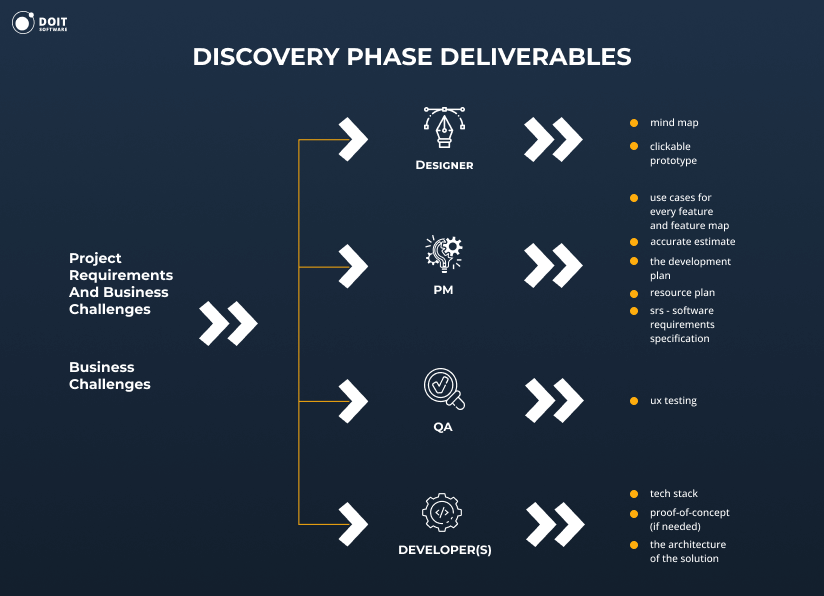
The number of features and complexity of the future app should be established after the market research during the discovery phase. Without knowing the market and target audience, establishing which features are important will be very difficult and unproductive.
For a mobile solution, you have two options when it comes to platform choice: native and cross-platform. Native app development delivers one app for one platform (iOS or Android), whereas the cross-platform approach lets businesses create an app for two platforms at once, using one source code base.
The catch is that native app development costs more, since you write two codebases. However, native apps demonstrate higher speed, better performance, and excellent UX.
The cross-platform development approach is noticeably cheaper. At the same time, metrics like UX, performance, and page load can suffer. There are a few tricks for developing cross-platform apps and also preserving high rates in performance and speed. For more on how to bring down mobile costs, see DOIT’s app development cost guide.
If you also want to create a web application, the choice of platform is less important. Most web development languages like JavaScript or Python are platform-independent, meaning you can create a web app that runs on Windows, Linux, macOS, or ChromeOS.
Although it may not sound like the most expensive item on the list, UI/UX design can be quite pricey. People have realized the potential of great UX and the difference it makes for an app.
UI/UX design incorporates buttons, colors, icons, navigation patterns, and the overall feel of using the application. Businesses also work to be inclusive and make their products accessible for visually and hearing-impaired users. The intensity and complexity of UI elements, together with your designer’s rate, drive the software development costs.
Besides the frontend, which holds the UI/UX design, you have to take care of the backend for the application. The bigger the app, the more complex processes you need to run the functions. For example, behind Uber’s easy-to-use interface and clear navigation, you will find many hidden processes that connect users to drivers and admins, load and update maps, track delivery, send notifications, and run billing.
Data protection has become a basic part of every business. You have to think about data privacy compliance throughout the entire software development process, and ensure that both your and the user data will be safe after the app launch. The challenge to keep compliance and regulatory functions in-house is bigger than ever with regulations being updated on the market almost every day.
For example, are you aware of the CCPA vs CPRA difference? Do you know what’s new in the GDPR regulations and that you have to be GDPR compliant if you have customers in the EU market? If you wish to stay on top of the ever-changing regulations and avoid costly fees and enormous penalties that can break your business, you need a data privacy software system to handle this for you.
You may also need to integrate with other systems to provide your services. That will require purchasing APIs or building custom ones in some cases. If you build an app that needs a large number of processes and third-party integrations, your backend development costs will rise.
The final and vital aspect of software development cost estimation refers to HR processes. Firstly, your bill will change depending on the team composition, hiring model, and the location of the development company. In this part of the article, we will explore how and why these aspects influence the software development budget and try to find ways to decrease the costs.
A standard software development team for web solutions usually includes frontend and backend developers, for mobile – backend and mobile app developers who write code, and a Quality Assurance (QA) engineer who runs tests. Besides that, development teams employ a UI/UX designer to create user interface elements and make the app aesthetically appealing and easy to use. On top of that, there is a DevOps engineer who takes care of the CI/CD pipeline, a Product Manager who makes sure the product requirements are in place, and a Project Manager who manages both the team and the processes.
If you are building a small application on a tight budget, you will not require a large team of coders and managers. The complexity and scale of the project identify the budget.
For products with AI-driven features, the team gets one or two more specialists: AI engineers or ML engineers who train and integrate the model, and sometimes a prompt engineer who works on LLM behavior. AI specialist rates run higher than typical full-stack rates in every region.
We will describe the four most common hiring models that are prevalent in the tech market. You can employ in-house workers, hire freelancers, hire contractors with staff augmentation, or outsource your project to a third-party vendor, choosing the best BPO company. Before you can estimate software development costs, familiarize yourself with different models and choose the one that suits your business.
Freelance software developer rates are usually lower than in-house employee’s salary, but the quality of the project might suffer. On the other hand, freelancing and outsourcing are great for short-term projects, and the in-house model only works for long-term collaborations. What are the benefits and drawbacks of each model?
Costs
Expensive: includes taxes, benefits, hiring costs, office equipment, etc.
Affordable: you can find a freelancer on freelancing platforms like Toptal or Upwork.
Predictable hourly rate per developer, no recruitment fee and admin costs.
Affordable: depending on the pricing model, you will avoid extra charges.
Contract duration
Long-term: in-house workers are usually hired for the long term.
Short-term: freelancers are hired per project.
Flexible: scale up or down monthly, with no long-term commitment.
Both: you can outsource a small task for the short term or hire a dedicated team for a long-term project.
Quality
Good: HR will make sure to vet the candidates and find you the best worker.
Variable: some freelancers may not be very reliable.
Strong: a staff augmentation partner vets every developer before hiring.
Good: an outsourcing company will be contractually obligated to deliver.
Communication
Great: you will communicate via corporate channels.
Poor: as the worker is not a part of your team, a few misunderstandings might arise.
Direct: augmented developers join your daily standups, Slack, project tools, and code reviews.
Good: you will be assigned an account manager to handle communication about your project.
Dedication
Great: your in-house employee will be dedicated to performing well.
Poor: short-term freelancers might lack the motivation to perform their best.
Strong: augmented developers work full-time on your product.
Good: reliable outsourcing companies are fully dedicated to your project.
In-house development gives you the highest control and the deepest product knowledge over time, since every developer stays inside the company. The trade-off is that in-house is the most expensive option per developer (salary plus taxes plus benefits plus office plus recruiting costs plus management overhead) and the slowest to ramp (3 to 9 months from job opening to fully productive senior engineer in most markets). In-house works best for long-term core product work where the developer stays for years.
Freelance sits at the opposite end. Hourly rate is the lowest of the four models, ramp time is days, and contract length is hours to weeks. Quality and reliability vary widely (the best freelancers are often booked solid, while the easily-available ones are often the weakest). Freelance fits well for narrow, well-defined tasks where the spec is clear and the dependency on team integration is low.
Staff augmentation gives you the closest experience to hiring in-house, with the flexibility of a freelance contract on top. A staff augmentation partner like DOIT typically delivers first matched profiles in 3 to 5 business days for the most common stacks (React, Node, Python, .NET, Flutter, Salesforce, ML). For larger long-term needs, the same partner can assemble a dedicated development team with matched roles.
Project outsourcing hands the full build over to an external vendor against a defined scope and a fixed (or capped) price. The vendor manages the team, the process, and the delivery; you manage the contract. Outsourcing works for one-off projects with a clear definition of done. It works poorly for products that need to evolve over years, since each new requirement runs through a change-order process.
On top of the sourcing model, you also pick a pricing model: Time and Materials (you pay for hours worked, common for staff augmentation and long-running projects), Fixed Price (a single agreed amount for a defined scope, common for short projects), or Value-Based (a fee tied to the business outcome the software delivers).
Software development costs also depend on the location of the development team. If you go remote, you may bring your software development prices down by a large percentage. The table below shows 2026 hourly rates for offshore software development rates by region, split by seniority level.
United States
$60 - $100/hr
$100 - $150/hr
$120 - $200+/hr
Western Europe
$40 - $80/hr
$60 - $100/hr
$80 - $150/hr
Eastern Europe
$25 - $50/hr
$35 - $65/hr
$50 - $85/hr
Latin America
$30 - $45/hr
$45 - $60/hr
$60 - $75/hr
Asia
$20 - $35/hr
$25 - $45/hr
$35 - $60/hr
In 2026, Latin American rates fell about 7 percent year-on-year, the sharpest drop of any region, reversing the post-pandemic highs. European rates dropped about 4 percent. The driver is AI productivity spreading across teams, which has made hourly rates a weaker signal of delivered value and pushed competitive pressure on outsourcing vendors. The picture in onshore versus nearshore versus offshore decisions has changed accordingly.
DOIT’s network spans Eastern Europe (Ukraine, Romania, Bulgaria, Czechia, Poland) and Latin America (Mexico, Argentina, Brazil, and other regional markets), the two regions where 2026 rates land 30 to 60 percent below US or Western European baselines while still offering useful time-zone overlap with US business hours.
For sourcing, this means two things in 2026. First, the typical full-stack rate quietly already includes AI-augmented workflow productivity. Second, AI feature work calls for specialists with verified ML or LLM integration experience, who price at a premium across every region. Sourcing developers with proven AI-augmented workflow experience (Copilot, Cursor, Claude Code, and similar tools) is now part of the standard vetting for stacks like React, Python, Node, .NET, and Flutter, and DOIT’s vetting funnel screens for it directly.
Now, we’ve covered most of the aspects that determine the budget of your software development. Still, in this part, we want to mention some factors that are less obvious but can significantly influence the final cost. What are those?
Firstly, describe your idea in detail and the problem your app is going to solve. Based on that, prepare a list of essential and non-functional features you would like to implement. Add a few examples of existing solutions and specify your unique value. Finally, provide technical specifications, design ideas, and some wireframes.
There are a few methods of custom software development cost estimation. Pick the method that matches the stage you’re at: Ballpark before requirements are clear, Detailed once they are, Analogy when a near-identical past project exists, PERT when you need to quantify uncertainty.
There are some software development cost estimation examples that you can find online. However, with the following steps, you can create a template by yourself:
The cost of software development is hard to grasp when every project sits in a different cost band and rates change by region. Without a clear view of what the build will cost across regions, you are bound to overspend or undercut the work. Luckily, there are tech companies that can help you get through this challenging phase and find the right developers for the budget. Contact DOIT Software and use our extensive knowledge and experience to get developer rate estimates from multiple regions matched to your project requirements at a sensible cost.
Transform your idea into a successful product with top developers from DOIT.
Contact usDepending on the project requirements, features, the location of the software development company, and other aspects, software development costs for a small app are from $30,000 to $45,000, for a medium-sized project from $70,000 to $100,000, and for a large-scale complex application, $100,000 and more. Enterprise-grade builds run from $200,000 up to $1,000,000 or more, and AI-native products with custom model training and LLM orchestration push the top end past $1.5M.
There are a few ways of calculating software development costing, but we can roughly divide them into two categories: ballpark and detailed. Ballpark is a rough estimation you receive to get an idea of how much the app development will cost, whereas a detailed estimate is what follows afterward and calculates the costs more scrupulously.
US developer rates run $80 to $200 per hour. Western Europe runs $60 to $150. Eastern Europe runs $30 to $85. Latin America runs $30 to $75. Asia runs $20 to $60. Senior tiers anchor the upper end of each range. In 2026, Latin American rates fell about 7 percent year-on-year and European rates fell about 4 percent, mostly because AI productivity has loosened pressure on hourly rates.
Yes, on the build side. GitHub’s controlled research found developers using Copilot finished narrow tasks 55 percent faster, and real-world teams report 10 to 25 percent productivity gain on complex multi-file work. The math reverses on the product side: adding AI features to a product adds $20,000 to $150,000 for typical ML or LLM integration, and $500,000+ for AI-native platforms.